Five Minutes and a Weather App: The Free Betting Edge Sharp Players Use Every Single Week
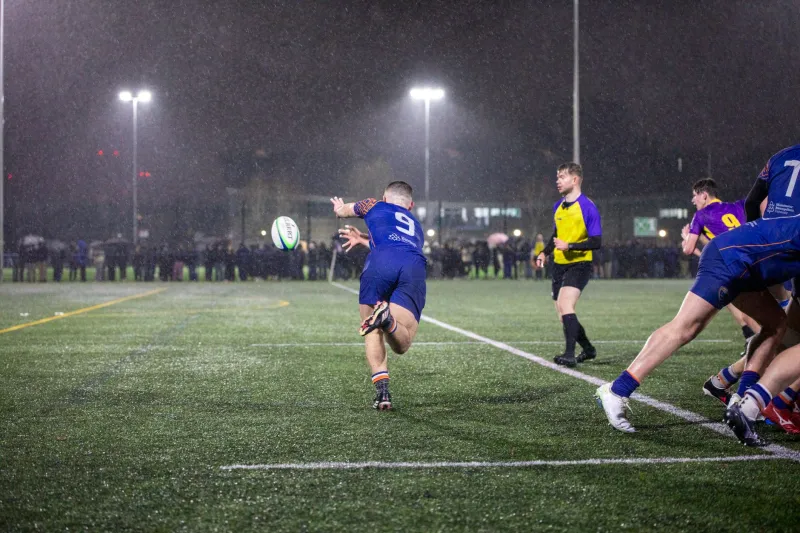
Most bettors spend hours hunting for an edge. They dig through injury reports, chase line movement, cross-reference analytics sites, and argue about advanced metrics in Discord servers at midnight. Meanwhile, one of the cleanest, most consistent information advantages available sits completely free on every smartphone in America — and most casual bettors scroll right past it.
The weather forecast.
It sounds almost too simple. But the gap between what outdoor conditions actually do to scoring totals and how the general betting public accounts for that information is genuinely significant. Sharp bettors have known this for years. If you're not integrating weather data into your pre-game routine, you're leaving real value on the table every single week of the NFL season, college football slate, and MLB calendar.
Let's break down exactly how this works — and how to use it.
Why Weather Moves Games More Than the Public Thinks
The average bettor looks at a game total and thinks about offenses and defenses. They think about quarterbacks, pace of play, recent scoring trends. What they rarely think about is that a 25 mph sustained wind fundamentally changes the physics of throwing a football.
At wind speeds above 15 mph, passing accuracy drops measurably. Quarterbacks shorten their routes. Offensive coordinators abandon deep shots. Field goals become genuine gambles beyond 45 yards. Every one of those factors suppresses scoring — and if the books haven't moved the total down far enough to account for conditions, you've got a mathematical lean toward the under before the opening kickoff.
Temperature is its own variable. Cold weather games — think late November in Green Bay, a December night in Chicago, or a January playoff matchup in Kansas City — consistently trend toward lower scoring output. Receivers lose some feel for the ball. Kickers struggle with distance. Running games become more prominent because teams play conservatively. Historical data on NFL games played below 32 degrees shows a clear and meaningful suppression of scoring compared to games played in neutral conditions.
Precipitation layers on top of all of this. Rain makes balls slippery. Snow creates footing issues that affect routes, cuts, and blocking. A wet field in the first half often gets torn up and muddy by the second, which compounds the problem as the game goes on.
Real Examples Where Weather Created Line Value
Back in 2018, a late-season Bears-Rams matchup in Chicago drew significant public action on the over — because the Rams were one of the highest-scoring offenses in the league that year and the public was betting reputation, not conditions. Wind gusts topped 30 mph at Soldier Field. The game went under by a wide margin. Bettors who checked the forecast before fading the public had a clean, data-supported reason to back the under that had nothing to do with gut feeling.
In MLB, the effect is even more direct and arguably more exploitable. Wrigley Field in Chicago is one of the most weather-sensitive venues in American professional sports. When wind is blowing out toward the bleachers, Wrigley becomes a launching pad and totals balloon. When wind is blowing in off Lake Michigan, the same park plays like a pitcher's paradise. Sharp bettors have tracked Wrigley wind direction for decades. On days when the wind is blowing in hard at 15-plus mph, the under at Wrigley has historically hit at a rate that makes flat betting it profitable over large samples.
College football has its own weather stories. Midwest night games in October can see temperature drops of 20 degrees from kickoff to the fourth quarter. Mountain West games at altitude add yet another layer. Any bettor who treats a 3:30 PM kickoff in Lubbock, Texas in September the same as a November night game in Columbus is ignoring information that the sharp money is absolutely not ignoring.
The Variables That Matter Most — and How to Weight Them
Not all weather conditions are created equal when it comes to betting impact. Here's a practical hierarchy:
Wind speed is the single most impactful variable for football totals. Under 10 mph — largely irrelevant. Between 10 and 20 mph — worth noting, especially for outdoor stadiums without wind protection. Above 20 mph — a significant lean toward the under, particularly in passing-heavy matchups. Above 30 mph — treat it as a near-automatic under signal unless the line has already moved to account for it.
Precipitation matters most when it's consistent throughout the game rather than a brief shower. A steady rain game in the NFL trending toward a physical, run-heavy matchup is a legitimate under signal and sometimes a lean toward the underdog if the spread assumes a high-powered offense performing at full efficiency.
Temperature becomes a meaningful factor below 40 degrees for football and below 50 degrees for baseball. The lower it goes, the stronger the lean toward unders and running games.
Turf conditions are underrated. A rain-soaked natural grass field affects both offense and defense, but it disproportionately impacts speed receivers and mobile quarterbacks — the players offenses are often built around. If a team's entire identity is built on a fast, spread-option attack, a muddy field is a genuine handicapping variable.
Building Weather Into Your Pre-Game Routine
The good news is this doesn't require a meteorology degree or a paid data subscription. Here's a simple checklist you can run through in under five minutes for any outdoor game:
-
Pull the forecast for the stadium location at game time, not just the day's general weather. Weather.com and Weather Underground both offer hourly forecasts with wind speed and direction.
-
Check the stadium's wind exposure. Some venues are naturally sheltered by geography or stadium design. Others, like Soldier Field in Chicago or MetLife Stadium in New Jersey, are notorious for amplifying wind conditions.
-
Look at the posted total and compare it to the previous day's opener. If the total has already dropped significantly, the books may have already priced in the conditions. If it hasn't moved much despite a rough forecast, that's where value lives.
-
Cross-reference with the game's offensive profile. A wind-game matters more when both teams rely heavily on the passing game. A matchup between two run-first teams in cold weather is less dramatically affected.
-
Check sharp movement. If you're seeing the total get bet down despite public money on the over, weather conditions are often the reason sharp players are hammering the under.
The Edge Is Right There — Most People Just Won't Bother
Here's the honest truth about weather betting: the edge exists precisely because most bettors find it unglamorous. There's no hot take to post about it. Nobody's going viral for explaining that a 28 mph wind in Foxborough suppresses passing efficiency. The casual bettor wants to talk about Patrick Mahomes or the Dodgers' lineup. They want the story, not the data.
Sharp bettors love that. The less the public values a piece of information, the more valuable it becomes for the bettors who actually use it.
YouLike191 Bet is built around the idea that playing bold means playing smart — and smart means using every available tool before you commit a dollar. Weather data is free, it's accurate, and it's been beating the books for anyone willing to spend five minutes checking it.
The forecast is already up. The question is whether you're looking at it.