Conference Chaos Pays: How Smart Bettors Are Cashing In on Big Ten Realignment Confusion
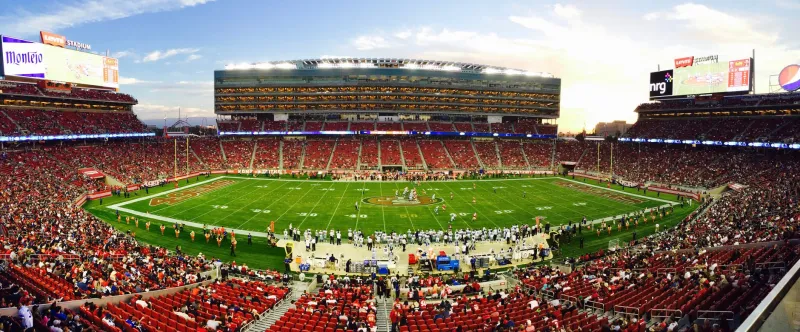
College football has always been a bettor's playground — passionate fanbases, inconsistent officiating, and wild swings in team quality from week to week. But the latest round of conference realignment has cranked the chaos dial up to eleven. USC and UCLA are now Big Ten programs. Oregon and Washington made the jump. The Pac-12 is basically a ghost. And oddsmakers? They're still catching up.
For fans who bleed their team's colors and have watched every snap for years, this moment is genuinely rare. Deep knowledge of a program — its coaching quirks, its roster turnover, its home crowd intensity — suddenly has more market value than ever. The sportsbooks are setting lines on matchups they've never had to price before. That gap between what you know and what they know? That's where profit lives.
Let's break down how to actually use this moment.
Why Realignment Creates Exploitable Betting Edges
When teams switch conferences, they don't just change their schedule. They change their travel demands, their recruiting pipelines, their rivalry dynamics, and their psychological comfort zones. Oddsmakers rely heavily on historical data to set opening lines. When that historical data doesn't exist — or is suddenly irrelevant — early lines tend to be soft.
Think about it: when Oregon faces Rutgers in a Big Ten game, what comparable game does the book's model pull from? Not much. That uncertainty gets baked into a line that may not accurately reflect the true competitive gap. Sharp bettors hunt these exact situations.
The first year of any major realignment is especially fertile ground. Teams are playing in new stadiums against unfamiliar opponents, dealing with longer road trips, and adjusting to new conference officiating tendencies. All of that creates noise — and noise is opportunity.
Travel Fatigue Is Real, and It's Underpriced
This one doesn't get enough attention. When UCLA flies to play at Penn State, that's a cross-country trip that didn't exist in the Pac-12 era. When USC makes a late-season visit to Michigan in November, they're walking into a frozen Big House after spending most of their careers playing in 70-degree California weather.
Fatigue factors compound quickly in college football. Unlike the NFL, these are 18-to-22-year-olds managing class schedules, film study, and grueling road trips without the recovery infrastructure of professional teams. A program that traditionally flew two hours for away games is now logging five-hour flights. That matters on third-and-short in the fourth quarter.
When handicapping these games, look for:
- Teams making their third consecutive road trip in a month
- West Coast programs playing night games in cold-weather Big Ten cities late in the season
- Short-week scheduling that compounds travel stress
Books often underweight these factors in their initial lines, especially early in a team's first season in a new conference.
Quarterback Turnover and the Transfer Portal Effect
The transfer portal has completely changed how college football rosters are built — and it's a massive variable in betting markets. A team that returns its starting quarterback enters the season with a known commodity. A team that brought in a portal transfer is a question mark, no matter how many stars that quarterback collected in high school.
Here's the edge: fans who followed a quarterback at his previous program know things the sportsbook model doesn't fully account for. How does he perform under pressure? Does he struggle against aggressive zone coverage? Is he a rhythm passer who falls apart when the pocket collapses?
Those tendencies travel with the player. If you watched a quarterback torch weak competition at a mid-major school but noticed he wilted against Power Four defenses, that knowledge is directly applicable when he shows up as a starter for a newly realigned Big Ten program.
Before betting any game involving a transfer-heavy roster, do this quick audit:
- How many of the team's key offensive skill players are in their first year with the program?
- Has the new quarterback faced a defense with the complexity level of a Big Ten unit?
- What's the offensive coordinator's track record developing new starters quickly?
Home Field Advantage in College Football Hits Different
Professional bettors have long known that home field advantage in college football is more significant than in any other American sport. The crowd noise, the hostile environment, the travel disruption for visiting teams — it all adds up. But in the realignment era, there's an added layer.
New conference rivalries mean visiting teams are walking into stadiums where the crowd specifically wants to make a statement. When USC came to the Big House for the first time as a Big Ten program, Michigan fans weren't just cheering for their team — they were sending a message to the whole conference. That energy is real, and it translates into tangible performance advantages.
As a bettor, pay attention to:
- Conference newcomers playing their first road game in a historically intense Big Ten environment (State College, Columbus, Ann Arbor)
- Teams with young rosters who haven't experienced that kind of crowd noise
- Programs that historically underperformed on the road even within their previous conference
Home underdogs in these situations often offer genuine value, particularly when the spread reflects the visiting team's overall talent advantage without accounting for environment.
Coaching Tendencies Are Your Secret Weapon
Every head coach has a fingerprint. Some are aggressive on fourth down. Some are conservative in the red zone. Some panic and abandon the run game when they fall behind early. These tendencies are documented in years of film and game logs — and passionate fans often know them better than any algorithm.
In the Big Ten's expanded landscape, you'll find coaches facing new defensive schemes they haven't prepared against in years. A West Coast spread offense coordinator who built his system to attack Pac-12 coverages may struggle initially against Big Ten-style two-high safety shells. Those adjustments take time.
Track coaching tendencies by asking:
- How does this coach handle must-win conference games versus nonconference tune-ups?
- What's his record against the spread when his team is a double-digit favorite?
- Does he go for it on fourth down or kick field goals in tight, low-scoring games?
This kind of granular knowledge is exactly what separates a fan who bets from a bettor who wins.
Building Your Big Ten Betting Approach
The bottom line is straightforward: conference realignment has created an information asymmetry that won't last forever. Right now, passionate college football fans who've followed specific programs for years hold a genuine edge over the market. The sportsbooks will catch up — they always do. But in the meantime, the opportunity is sitting right there.
At YouLike191 Bet, we believe your passion for the game deserves to work harder for you. You've spent years watching these teams, understanding their rhythms, and arguing their merits at tailgates and sports bars across the country. The Big Ten's new era isn't just a storyline — it's an invitation to play bold and bet smarter.
Do your homework on travel schedules. Watch the quarterback transfers closely. Respect the home crowd. And when the line looks off on a game you know better than the book does, trust your read.
The sportsbook is open. Your knowledge is the edge. Use it.